
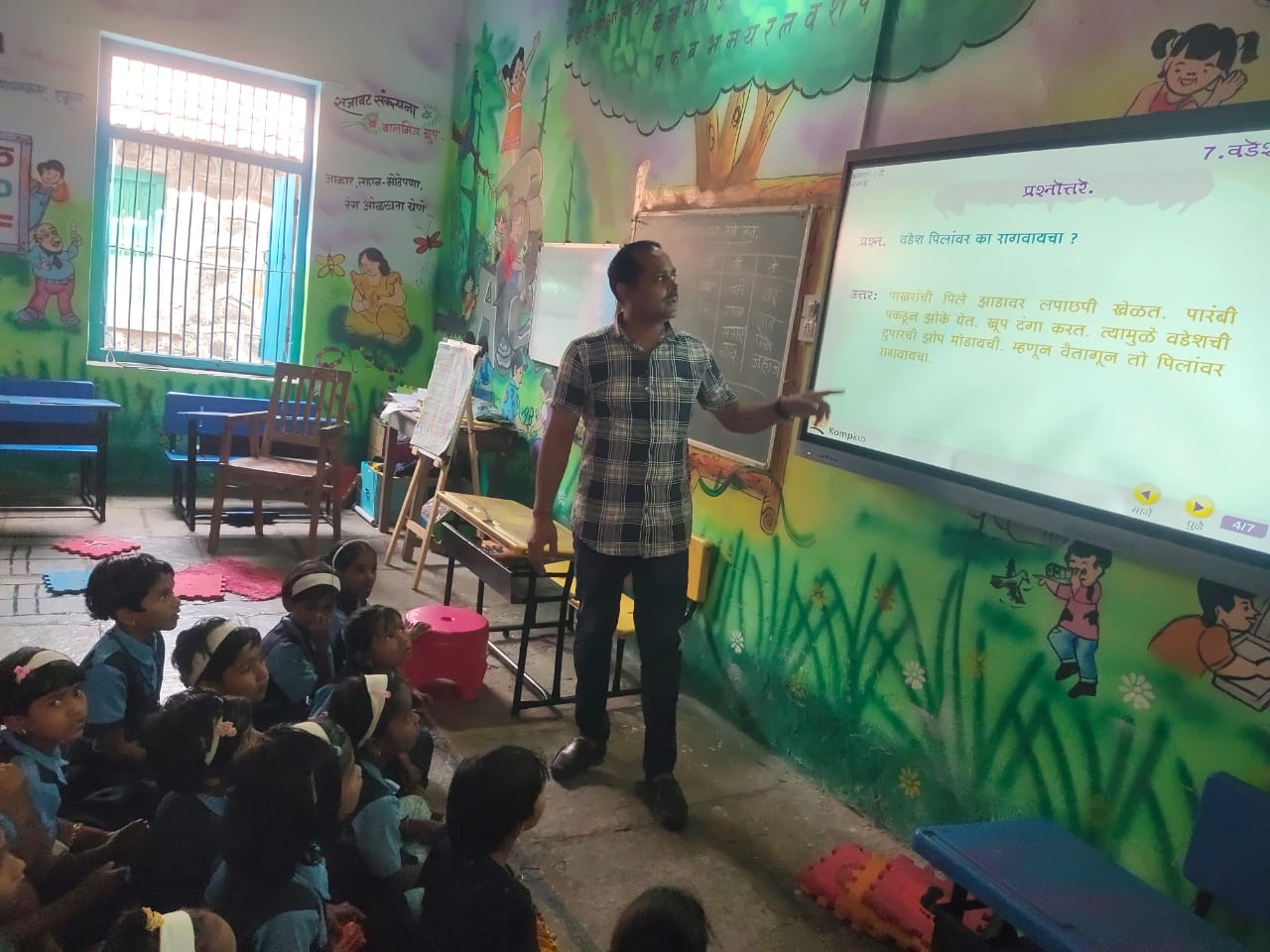
Addressing Educational Gaps through the Digi-Aid Project
(Smart Interactive Boards with Balbharati-Aligned Digital Content)
Ensuring equitable access to quality education continues to be a pressing challenge across rural India—particularly in low-developed regions like Khandala taluka in Satara district, Maharashtra. Although the region holds historical and cultural significance, it still struggles with limited urbanization, minimal industrial growth, and inadequate infrastructure. These developmental gaps directly affect government primary schools, restricting children’s access to modern and effective learning environments.
Why This Initiative Needed
1. Limited Digital Infrastructure in Rural Schools
Most schools in Khandala taluka lack digital learning tools such as smart boards, e-learning content, or technology-enabled teaching aids. This leaves rural students far behind their urban counterparts in exposure to modern learning methods.
2. Shortage of Quality Teaching-Learning Material (TLM)
Teachers often rely solely on traditional chalk-and-board teaching due to limited Teaching-Learning Material (TLM) in crucial subjects like Language, Mathematics, and Science. This affects concept clarity and reduces student engagement, especially in early grades.
3. Need to Improve Teaching Efficiency
Teachers expressed the need for tools that can enhance lesson delivery, provide standardized content, and make difficult topics easier to explain. Digital tools and smart boards can significantly boost teaching quality and student participation.
4. Educational support needed in Khandala Region
Khandala is listed as one of the “low-developed” talukas in Satara due to:
- Poor educational infrastructure
- Limited access to technology
These factors reinforce the urgent need for digital inclusivity in classrooms.
5. Demand Expressed Directly by Schools
Through a detailed need assessment across schools—such as ZPUPS Shindewadi, Dhangrwadi, Atit, Kavate, Khandala, Morve, Sukhed, Lonand, Mari Aaichi Wadi, Pimpre and others—teachers and school authorities formally requested support. They emphasized the necessity of digital classrooms, TLM support, and interactive learning resources.
The Intervention: Digi-Aid Project for Digital Learning
To bridge these gaps and uplift rural education, launched the Digi-Aid Project in Khandala block. The intervention focuses on transforming traditional classrooms into engaging, tech-enabled learning spaces.
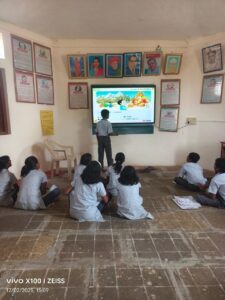
Key Components of the Initiative
- Smart Interactive Boards with Balbharati-Aligned Syllabus
Digital boards equipped with curriculum-based content enable systematic, interactive, and standardized learning for all grades. - Digital Education Platforms
Modern teaching software helps simplify complex concepts and boosts students’ understanding across subjects. - High-Quality TLM Kits
Teaching-Learning Materials in Language, Mathematics, and Science for Grades 1–7 encourage hands-on learning and strengthen foundational knowledge. - Teacher Empowerment
Training on using digital tools and TLM effectively enhances classroom efficiency and improves student engagement.
Impact Scope
- 25 Government Schools across Khandala taluka
- 5,000+ Beneficiary Students from Grades 1 to 7
- Transformation of rural classrooms into interactive, modern, and inclusive learning spaces
- Improved teaching quality, increased student interest, and enhanced learning outcomes
 Bhale Estate Behind Pratham, Pune, Maharashtra
